
A colleague of mine spent three mediation sessions trying to sort out arrangements for her two kids after separating from her ex. By the last session, he was cutting calls short, dodging questions about school pickups, and eventually just stopped replying to the mediator altogether. She came into work one morning looking exhausted and asked me, half-joking, “So is that it? Do I just give up now?”
It’s not it. It just means the next stage starts, and it’s a lot more structured than people expect walking in cold. Here’s the actual sequence of what happens if mediation fails in the UK, based on what she went through and what her solicitor walked her through afterward.
Table of Contents
- What Happens When Mediation Fails to Reach a Settlement?
- Step 1: Getting Your MIAM Certificate
- Step 2: Filing the Right Court Application
- Can I Skip Mediation and Go Straight to Court?
- Step 3: Mandatory Financial Disclosure
- Step 4: The First Court Hearing
- What Is the Process After Refusing Mediation?
- What Comes After Unsuccessful Mediation, Overall?
- Mistakes to Avoid
- Frequently Asked Questions
- Related Searches
What Happens When Mediation Fails to Reach a Settlement?
Mediation is entirely voluntary, and plenty of families walk out without an agreement — sometimes because one side won’t engage properly, sometimes because the issues are genuinely too complicated to untangle in a mediation room. None of that means you’re out of options. It just means the case moves into a more formal legal track, where a judge, rather than a mediator, makes the final call.
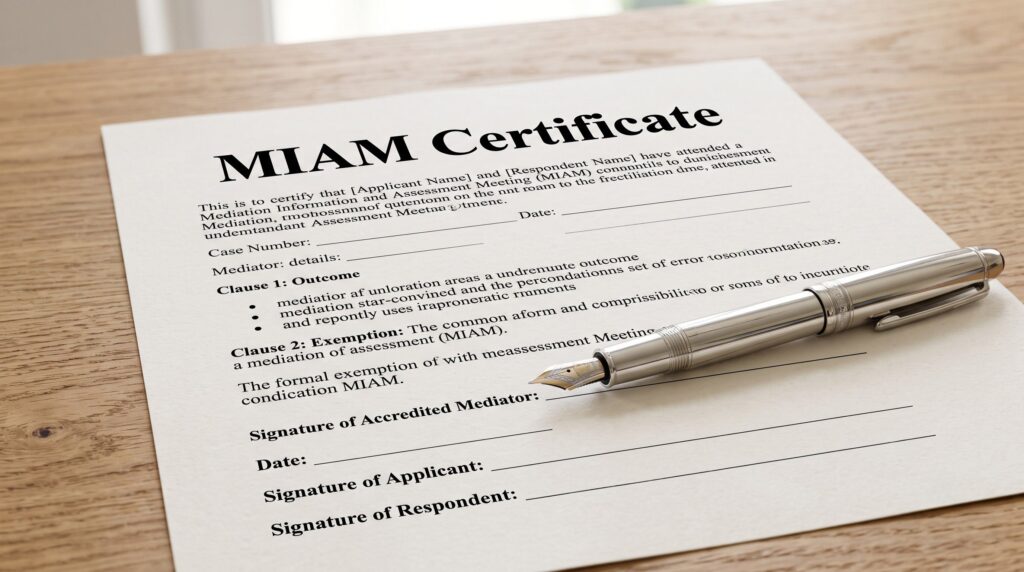
Step 1: Getting Your MIAM Certificate
The single document you absolutely need next is the MIAM Certificate. It’s the formal record proving you genuinely attempted to resolve things through mediation before heading to court.
Only an accredited mediator can issue and sign it. Without it, courts will generally reject your application outright, unless you qualify for a specific legal exemption, most commonly around domestic abuse.
Here’s the detail that catches people out: the certificate expires after four months from the date it’s issued. If your court application isn’t filed within that window, you’ll have to go back and pay for a fresh MIAM assessment. My colleague nearly let hers lapse simply because she assumed there was no real rush.
Step 2: Filing the Right Court Application
Once you’ve got your certificate, the next move is submitting the correct application to the Family Court.
- Child arrangements — this covers where a child lives and who they spend time with, filed using a C100 form.
- Financial settlements — for dividing assets, pensions, and property, filed using a Form A.
As of April 2026, the court fee for these applications sits at £263. If you’re on a low income or receiving certain benefits, you may qualify for help to have this fee waived entirely.
Can I Skip Mediation and Go Straight to Court?
For most people, no — not unless a specific exemption applies, such as evidence of domestic abuse or genuine urgency involving a child’s safety. Courts generally expect to see a valid MIAM certificate attached to your application before they’ll process it. Trying to bypass mediation without qualifying for an exemption usually just means delays, since the court will send your case back rather than proceed without it.
Step 3: Mandatory Financial Disclosure
Even once mediation has fallen apart, honesty isn’t optional going forward — if anything, it becomes more formal. For financial cases, this stage is known as Full and Frank Disclosure, done through Form E. You’re required to list every asset, debt, and source of income, in full.
If documents were held back during mediation sessions, this is where that stops. Hiding assets at this point can lead to serious legal penalties, or a judge simply ruling in favour of the other party once discovered.
Step 4: The First Court Hearing
Your first hearing is typically called a First Hearing Dispute Resolution Appointment. Its purpose isn’t to settle everything immediately — the judge reviews what’s genuinely still contested and checks whether there’s still room for agreement without a full trial.
If things remain unresolved, the judge sets what are called Directions. This might involve ordering a report from social services regarding the children, or arranging a professional valuation of the family home before the case moves forward.

What Is the Process After Refusing Mediation?
If mediation broke down because one party simply refused to attend at all, that shows up on the MIAM certificate, and judges do take note of it. A judge can’t force anyone into an agreement, but they do have real tools available. In 2026, they can order the person who unreasonably refused to mediate to pay part of the other person’s legal costs, or pause the case entirely and strongly encourage both sides to give mediation one more genuine attempt before proceeding further.
What Comes After Unsuccessful Mediation, Overall?
Pulling it all together: you get your MIAM certificate, file the correct application (C100 or Form A), go through financial disclosure if relevant, then attend a first hearing where a judge decides what happens next — whether that’s further directions, expert reports, or eventually a final hearing months down the line.
Mistakes to Avoid
- Letting the four-month MIAM certificate window slip by without filing.
- Assuming you can skip mediation entirely without actually confirming you qualify for an exemption.
- Withholding financial documents at the disclosure stage, assuming it won’t come up again.
- Refusing to attend mediation without realising it could affect legal costs down the line.
- Expecting the first court hearing to resolve everything immediately, rather than being a step toward a final decision.
Frequently Asked Questions
What happens when a mediation fails to reach a settlement?
The case moves to Family Court. You’ll need a MIAM certificate confirming mediation was attempted, complete financial disclosure if relevant, and attend a first hearing where a judge decides next steps.
What comes after unsuccessful mediation?
You get a MIAM certificate, file the appropriate court application (C100 for children, Form A for finances), and the case proceeds toward a first hearing in front of a judge.
Can I skip mediation and go straight to court?
Generally no, unless you qualify for an exemption such as domestic abuse or urgent safety concerns. Courts typically require a valid MIAM certificate before accepting an application.
What is the process after refusing mediation?
If you refuse to attend a MIAM without a valid exemption, this is recorded, and it can influence how the court views your case — including potential cost orders if a judge finds the refusal unreasonable.
How long after mediation can you go to court?
You should file your court application within four months of your MIAM certificate being issued, since it expires after that and you’d need a new one.
If mediation fails, what is the next step?
The next step is obtaining your MIAM certificate (if you don’t already have it), then filing the relevant court application so a judge can review the case and set a path forward.
Going to court after mediation — what should I expect?
Expect a court application fee (£263 as of April 2026), a first hearing (an FHDRA), and potentially several months’ wait due to court backlogs before a final hearing.
If I refuse mediation, will it go against me in court?
It can. Judges see on the MIAM certificate whether mediation was genuinely attempted, and can order the refusing party to contribute to legal costs or push for a further mediation attempt.
What happens when custody mediation fails?
The same general process applies — a MIAM certificate, a C100 application for child arrangements, and progression to a first hearing where a judge may order reports or further directions.
Related Searches
- How long after mediation can you go to court
- If mediation fails, what is the next step
- Going to court after mediation
- What happens if mediation fails in divorce
- No settlement at mediation
- If I refuse mediation will it go against me in court
- What happens when custody mediation fails
- When mediation doesn’t work in the workplace
Further reading: GOV.UK – Family mediation | GOV.UK – Making a child arrangements application
Disclaimer: This article is for general information only and isn’t legal advice. Moving from mediation to court involves complex procedures, deadlines, and costs. We strongly recommend speaking with a qualified family solicitor before filing any court application.

Sarah Mitchell is a family law specialist with a strong background in child arrangements, custody disputes, and family mediation. She joined LegalFacts.uk to help parents across the UK understand their legal rights and make informed decisions for their children’s future.