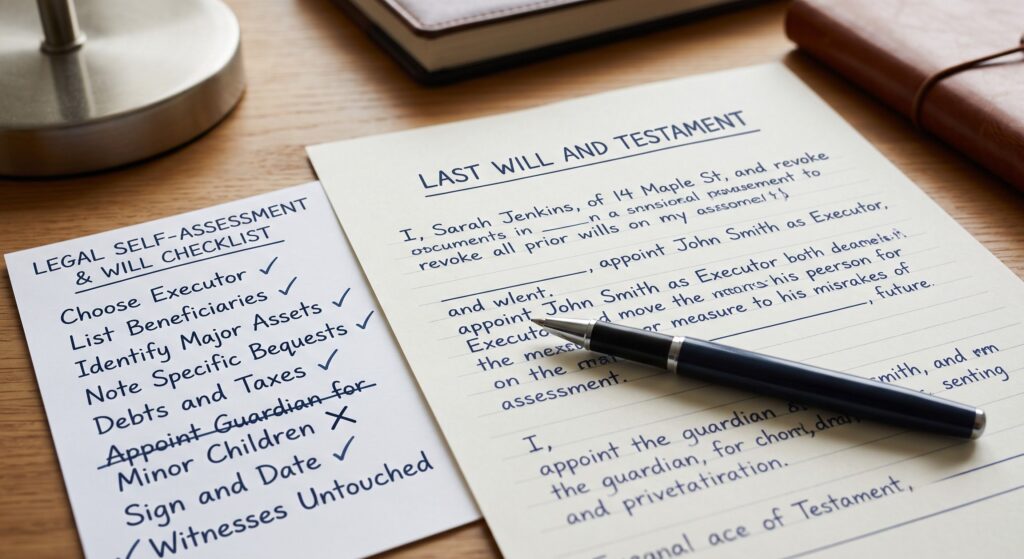
Short answer first, because this question deserves a straight one: yes, you can legally write your own will in the UK. There’s no requirement to use a solicitor. But “legal” and “wise” aren’t the same word, and the gap between them is exactly where thousands of DIY wills quietly fail every year — not at the moment they’re written, but months or years later, when someone tries to use them and discovers a technical flaw nobody caught in time. Let’s go through the actual rules, what invalidates a will, and an honest self-check on whether you’re a good candidate for doing this yourself.
Can I Just Write My Own Will in the UK?
Yes. Will writing isn’t a reserved legal activity in England and Wales, meaning it’s not restricted to solicitors the way, say, conveyancing or litigation is. A handwritten will can be entirely valid, provided it meets the same formal requirements as a typed one: written down, signed by you, and witnessed correctly. What you can’t do is skip the formalities and expect it to hold up — an unwitnessed handwritten will, however heartfelt, generally isn’t valid in England and Wales.
What Invalidates a Will in the UK?
This is the section worth reading twice, because every point here has genuinely undone real wills:
- Not being in writing. Verbal wills aren’t valid, except in narrow circumstances for active military personnel.
- Missing or incorrect signature. You must sign it yourself (or direct someone to sign on your behalf, in your presence).
- Witnesses not present together. Both witnesses must watch you sign at the same time — if you leave the room before both have signed, the will can be invalidated.
- A beneficiary (or their spouse) acting as a witness. Under Section 15 of the Wills Act 1837, this doesn’t void the whole will, but it does void that specific person’s gift — which can send it falling into intestacy or an unintended distribution instead.
- Lack of testamentary capacity. The testator must understand what they’re doing, the extent of their estate, and who might reasonably expect to benefit — this is tested against a long-standing legal standard from the case Banks v Goodfellow.
- Undue influence. If the will reflects someone else’s pressure rather than the testator’s genuine wishes, it can be challenged and set aside.
- A later marriage or civil partnership, which automatically revokes an earlier will unless it was made specifically in contemplation of that marriage.
What to Consider When Writing a Will in the UK
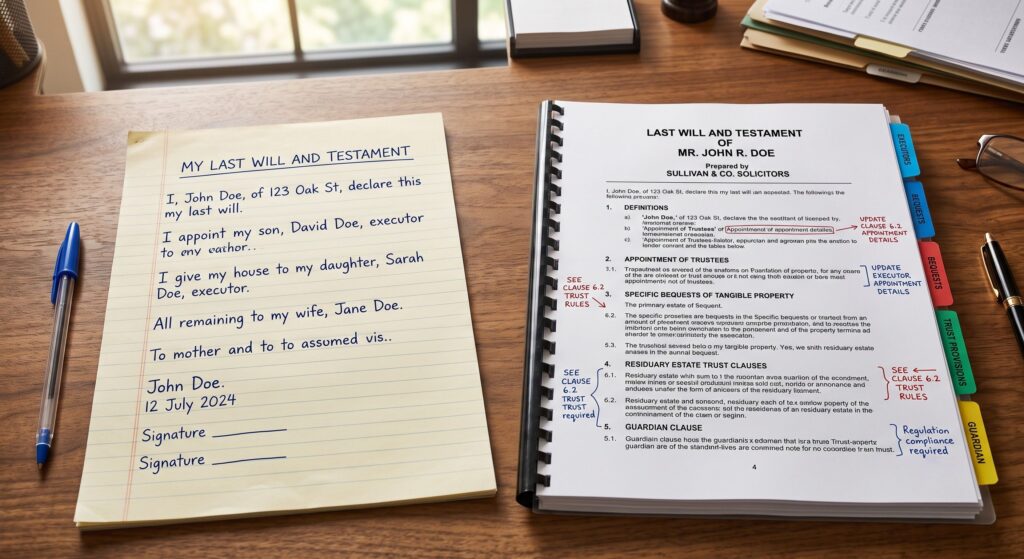
Beyond just avoiding invalidation, a genuinely solid will needs to address:
- Your full asset picture — property, savings, investments, digital assets, and anything of sentimental or significant value
- Specific versus general gifts — vague language invites disputes later
- Your executor and a backup, in case your first choice can’t act
- A guardian, if you have children under 18
- Contingencies — what happens if a beneficiary dies before you, or you and a spouse die together
- Whether your estate has any complexity — property abroad, a business, a blended family, or anything touching inheritance tax
That last point is really the dividing line for whether DIY is a sensible choice at all.
A Quick Self-Assessment: Is DIY Right for Your Will?
Answer honestly, and count how many apply to you:
- I have a single, clear main beneficiary (or a small, uncomplicated group)
- I don’t own property jointly with anyone other than a spouse as a simple joint tenancy
- I don’t have children from a previous relationship or a blended family situation
- I don’t own a business or have significant overseas assets
- There’s no concern about my mental capacity, now or reasonably foreseeable
- Nobody involved is likely to challenge or dispute the will
Five or six ticked: a well-reviewed template or online service is likely a reasonable fit.
Three or four ticked: consider at least a professional review of a self-drafted will, even if you don’t pay for a full solicitor consultation.
One or two ticked: this is the territory where DIY carries real risk, and professional drafting is worth the cost.
Your Will (UK): What Format Actually Works
Whether typed or handwritten, a valid UK will needs:
- A clear statement that it’s your will and revokes previous wills
- Your named executor(s)
- A guardian, if applicable
- Clear distribution instructions
- Your signature
- Two independent witnesses, present at the same time, who aren’t beneficiaries or married to one, signing in your presence
Martin Lewis Will Writing: What He Actually Recommends
Martin Lewis and MoneySavingExpert consistently point people toward free routes where eligible — Free Wills Month (March and October, for over-55s) and the National Free Wills Network — both of which involve an actual solicitor rather than a bare template. His broader caution is consistent with everything above: DIY kits are fine for simple estates, but the more complexity involved, the more a professional review matters.
Will Template UK and Writing a Will Template: What “Good” Looks Like
A decent template should walk you through each section with plain-language explanations rather than handing you a blank form, flag common pitfalls (like the beneficiary-witness rule) as you go, and ideally offer some form of review before finalising. Purely blank paper templates from a stationery shop carry the highest risk precisely because there’s no guidance built in at all.
Best Free Will Template UK and Make a Will Online Free UK
Free options generally come through seasonal charity schemes for over-55s, or occasionally through union membership benefits — both of which typically involve a real solicitor rather than a template alone. Outside of those windows, paid online services starting around £69 are the next most affordable step up, usually including at least a basic review process.
How Much Does It Cost to Make a Will With a Solicitor?
As a general 2026 guide: £150–£500 for a single will, £250–£900 for mirror wills as a couple, and £1,500 or more for anything involving a trust, business assets, or a genuinely complex estate. Regional pricing varies too, with London and the South East typically running 20–40% higher than elsewhere.
Common Mistakes to Avoid
- Using a beneficiary (or their spouse) as a witness, which voids that person’s specific gift.
- Signing without both witnesses present at the same time.
- Assuming a blank template is equivalent to a guided online service. The guidance is where the real protection lives.
- Ignoring capacity concerns. If there’s any doubt about mental capacity, professional involvement (and sometimes a medical assessment) matters far more than cost savings.
- Skipping contingency planning. What happens if a beneficiary predeceases you is one of the most commonly missed provisions.
Final Thoughts
DIY will writing isn’t reckless by default — for a genuinely simple estate, it’s a legitimate, legal, and often perfectly adequate choice. The risk isn’t in doing it yourself; it’s in doing it yourself when your situation actually needed more care than a template could give it, and not realising that until it’s too late to fix. Run the honest self-check above before you decide, not after you’ve already written it.
FAQ
Can I just write my own will in the UK?
Yes, will writing isn’t a regulated activity, so a self-written or handwritten will is legally valid provided it meets the formal signing and witnessing requirements.
What is a common mistake with a will?
Using a beneficiary or their spouse as a witness, which voids that person’s gift even though the rest of the will remains valid.
What to consider when writing a will in the UK?
Your full asset picture, specific rather than vague gifts, your executor and backup, guardianship if you have children, and any complexity like property, a business, or a blended family.
What invalidates a will in the UK?
Missing signatures, witnesses not present together, a beneficiary acting as a witness, lack of testamentary capacity, undue influence, and a later marriage that wasn’t accounted for.

David Hargreaves is a legal content writer specialising in wills, inheritance, and cohabitation rights. He is passionate about helping UK residents understand what happens to their assets and loved ones, and writes in-depth guides to make the law easy to understand for everyone.