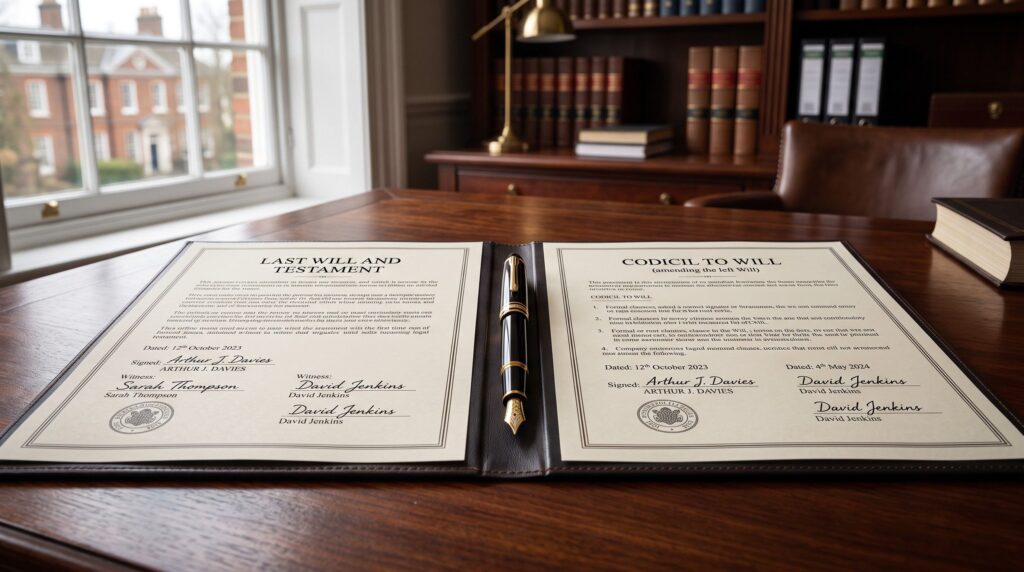
Meta Description: Need to know how to change your will in the UK? Here’s what I learned helping my dad update his after a family shake-up — codicils, new wills, and the mistake that nearly cost us.
My dad remarried in his sixties, and about a week after the wedding, he casually mentioned he “should probably update his will at some point.” Six months later, nothing had happened. When I finally sat him down and we looked into it properly, we found out something that genuinely shocked him: getting married had already cancelled his old will completely, whether he’d got round to updating it or not.
That’s how I ended up learning the actual difference between a codicil and writing a brand new will — and honestly, it’s a lot simpler than the legal jargon makes it sound. Here’s what I’d tell anyone trying to figure out how to change their will in the UK right now.
Table of Contents
- Why You Can’t Just Cross Something Out
- What Is a Codicil?
- What Are the Disadvantages of Using a Codicil?
- When Is It Better to Make a New Will?
- Does a New Will Override an Old Will?
- The Revocation Clause: The Detail That Matters Most
- What’s the Easiest Way to Change a Will?
- Can a Codicil Remove Beneficiaries?
- Can I Change My Will Without a Solicitor?
- Mistakes People Make
- Frequently Asked Questions
- Related Searches
Why You Can’t Just Cross Something Out
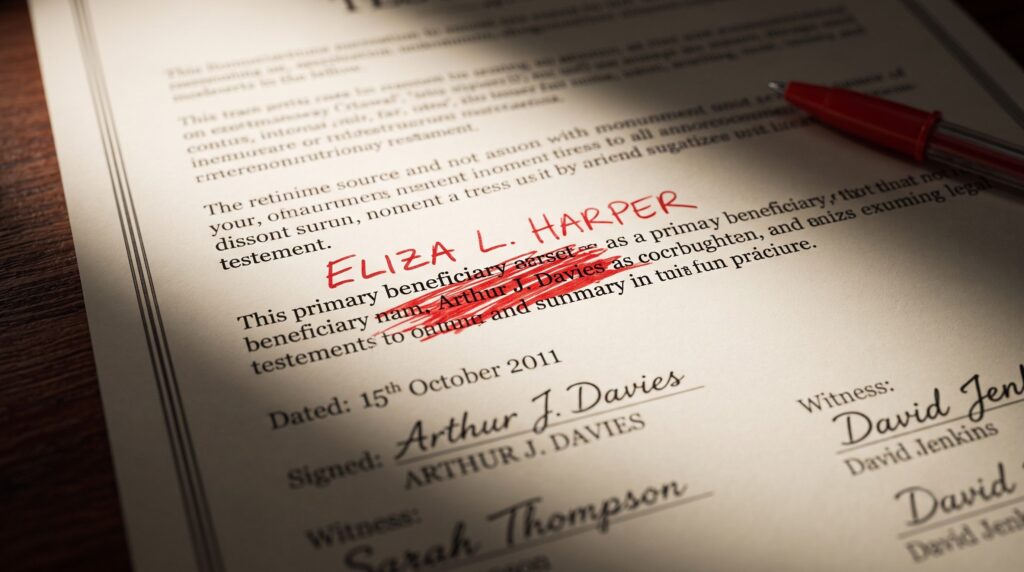
Here’s the bit that catches almost everyone out the first time. Once a will is signed and witnessed, you cannot just scribble out a name or write in a new figure by hand. Doing that risks voiding the entire document, not just the bit you changed. If you want to update your wishes, UK law gives you exactly two routes: adding a codicil, or writing a completely new will.
What Is a Codicil?
A codicil is essentially a legal add-on to your existing will. It lets you make small amendments without redoing the whole document from scratch.
It tends to work well for things like:
- Leaving a specific item or a small sum to a new grandchild or a charity
- Replacing an executor who’s no longer able to act
- Updating your funeral wishes
- Correcting a beneficiary’s name after they’ve married
The key legal requirement, and the one people underestimate, is that a codicil has to be signed and witnessed with exactly the same formality as the original will. Get that wrong, and the change simply doesn’t take effect — you’d have no idea until it’s too late to fix.
What Are the Disadvantages of Using a Codicil?
This is where my dad’s situation got interesting. A few codicils might sound like a cheap, easy fix, but they come with real downsides:
- They pile up confusion. Executors have to read your original will alongside every codicil you’ve added, and mismatched wording between documents is a genuine source of disputes.
- They’re not private. A codicil is filed alongside your original will. If you’re removing someone as a beneficiary, they can potentially see they were once included and then taken out — which can cause real family friction at exactly the wrong moment.
- They’re easy to lose. If a codicil goes missing, the court simply follows the original will as if the update never happened.
When Is It Better to Make a New Will?
Codicils used to be popular purely to save on drafting costs, but most legal advice in 2026 leans toward writing a fresh will for anything beyond a small tweak.
A new will tends to be the better call when:
- You’ve had a major life change — marriage, divorce, a significant shift in assets
- You want a clean slate rather than a visible paper trail of who got added or removed
- You’re making more than one or two changes at once
One detail that genuinely surprised my dad: in England and Wales, getting married automatically revokes your existing will. A codicil can’t fix that. Only a brand new will, made after the marriage, actually counts.
Does a New Will Override an Old Will?
Yes — provided it’s properly executed and includes a revocation clause (more on that below). A validly signed, witnessed new will legally cancels the previous one. The old will doesn’t just sit there as a backup; it stops being legally relevant the moment the new one takes effect correctly.
The Revocation Clause: The Detail That Matters Most
Whenever you write a new will, it needs to include a revocation clause — a standard line that formally cancels every previous will and codicil you’ve made. Skip this, and your executors could end up trying to reconcile two conflicting versions of your wishes, which tends to lead straight into expensive legal arguments nobody wanted.
Once your new will is signed, it’s worth physically destroying the old one. Leaving it lying around, even in a drawer, just creates room for confusion later.

What’s the Easiest Way to Change a Will?
Honestly, for most people making more than a very minor tweak, writing a new will is the easiest route in the long run — even though it feels like more effort upfront. It avoids the layered confusion of multiple codicils, keeps things private, and gives your executors one single, clear document to follow instead of a paper trail to piece together.
Can a Codicil Remove Beneficiaries?
Yes, technically a codicil can remove or change a beneficiary. The catch is what we covered above — because codicils are filed with the original will, removing someone this way can leave a visible trail showing they were once included. For sensitive changes like this, many people prefer a new will specifically to avoid that kind of family tension.
Can I Change My Will Without a Solicitor?
You can technically write a codicil or a new will yourself, provided it’s signed and witnessed correctly under UK law. That said, the formalities are unforgiving — a small wording mistake can accidentally revoke parts of your will you never meant to touch. Given how much rides on getting the wording exactly right, most people find the relatively small cost of a solicitor’s review is worth it for peace of mind.
Mistakes People Make
- Assuming a “Letter of Wishes” is legally binding. It isn’t — it’s a helpful guide for executors, but it can’t legally change how your assets are distributed.
- Forgetting that marriage automatically revokes an existing will in England and Wales.
- Adding several codicils instead of just writing a clear new will once things stack up.
- Not including a revocation clause in a new will, leaving old documents technically still in play.
- Keeping the old will lying around after signing a new one, creating room for mix-ups.
Frequently Asked Questions
What are the disadvantages of using a codicil?
Codicils can create confusion when there are several of them, they’re not private since they’re filed alongside the original will, and if one gets lost, the court simply follows the original will as if the change never happened.
What is the easiest way to change a will?
For minor tweaks, a codicil works fine. For anything more significant — a major life event, multiple changes, or wanting privacy — writing a new will is usually simpler and safer in the long run.
Can a codicil remove beneficiaries?
Yes, a codicil can remove or change beneficiaries, though because it’s filed with the original will, it can leave a visible record of the change, which sometimes causes family tension.
How do I change a codicil?
You can’t directly edit an existing codicil. To make further changes, you’d add another codicil or, more commonly recommended, replace everything with a new will that includes a revocation clause covering all previous documents.
Does a new will override an old will?
Yes, as long as it’s properly signed, witnessed, and includes a revocation clause cancelling previous wills and codicils.
How long does a new will override an old will?
Once validly executed, a new will overrides the old one immediately and indefinitely — there’s no time limit or expiry involved.
How much does it cost to add a codicil to a will?
Costs vary by solicitor, but with modern digital drafting, the price difference between a codicil and a full new will is often fairly small, which is part of why many solicitors now recommend a new will for clarity.
Can I make a new will if I already have one?
Yes. You can write a new will at any time, and as long as it’s properly executed with a revocation clause, it legally replaces the previous one.
Related Searches
- Does a new will override an old will
- How to change your will codicils vs making a new will
- Can I change my will without a solicitor
- Can I add a codicil to my will myself
- Can I change my will with a different solicitor
- How long does a new will override an old will
- How much does it cost to add a codicil to a will
- Can I make a new will if I already have one
Further reading: GOV.UK – Making a will | GOV.UK – Changing a will after death
Disclaimer: This article is for general information only and isn’t legal advice. Small errors in the wording of a codicil or new will can accidentally revoke parts of your estate plan you meant to keep. We strongly recommend having any changes reviewed by a qualified legal professional.

David Hargreaves is a legal content writer specialising in wills, inheritance, and cohabitation rights. He is passionate about helping UK residents understand what happens to their assets and loved ones, and writes in-depth guides to make the law easy to understand for everyone.