

5 Benefits of Choosing Mediation Over Court Litigation (2026)
When a relationship breaks down, the path to resolution often splits in two directions: the combative atmosphere of a courtroom or the collaborative environment of mediation. While some cases legally require a judge’s intervention, the vast majority of family disputes in the UK are better suited for mediation.
As we move through 2026, the UK legal system continues to prioritize out-of-court settlements. If you are weighing your options and asking, “Why is mediation better than court?” or “What are the main benefits of mediation?”, it is important to understand the significant advantages of opting for a resolution-focused approach rather than traditional litigation.
1. Significant Cost Savings
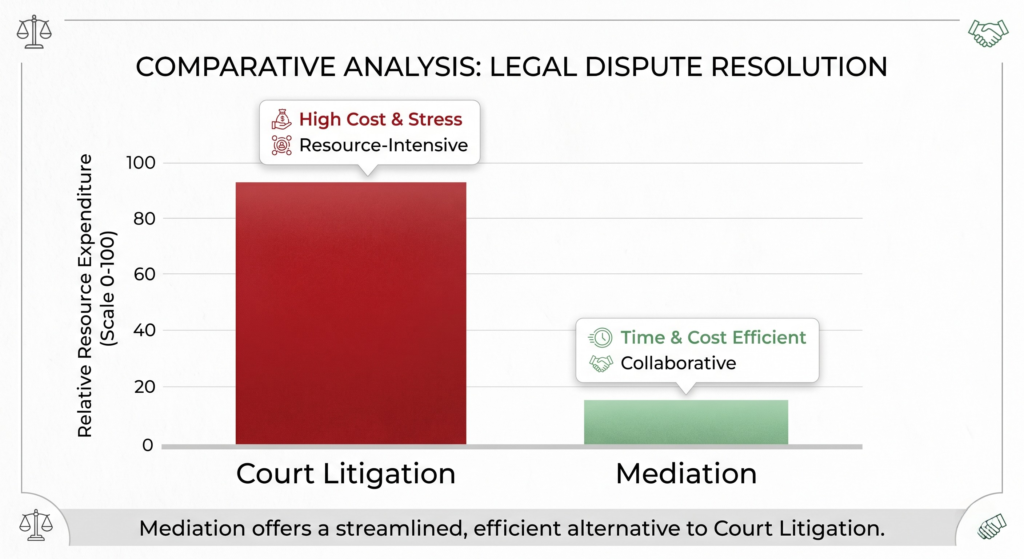
The most immediate advantage of mediation is financial. Court litigation involves two sets of solicitors, court fees, and potentially expensive barrister fees for multiple hearings. A contested financial or child arrangement case can easily cost upwards of £15,000 to £20,000 per person.
In contrast, mediation sessions are charged at a fraction of that cost. Furthermore, in 2026, many families can still benefit from the £500 Mediation Voucher Scheme for child-related disputes, making the process even more affordable and accessible.
2. Faster Resolution
The UK family court system is currently facing significant backlogs. It is not uncommon for a contested case to take 12 to 18 months to reach a final hearing. This long period of uncertainty often prevents families from moving forward with their lives.
Mediation moves at the pace of the couple. Most agreements are reached within 3 to 5 sessions, often spanning just a few months. This speed drastically reduces the time spent in the stressful state of “legal limbo.”
3. You Retain Control
In a courtroom, a judge who does not know your family personally will make a final, binding decision about your home, your finances, and your children. You lose the power to negotiate.
Mediation keeps the power in your hands. A mediator does not dictate outcomes; instead, they help you and your ex-partner create a bespoke solution that fits your specific family dynamic. You only sign an agreement if you are comfortable with the terms, ensuring the outcome is something you have personally shaped.
4. Less Stressful and More Confidential

Courtrooms are formal, intimidating, and inherently adversarial—it is often a case of “one side against the other.” This environment frequently causes long-term damage to the relationship between parents.
Mediation is private and confidential. It takes place in a neutral, calm setting (or via secure video link). Because the focus is on communication rather than “winning,” it helps preserve a working relationship, which is vital if you need to co-parent children for years to come.
5. Flexibility for the Future
Court orders are rigid. If your circumstances change, you often have to return to court to vary the order, which costs more time and money.
Mediation allows for flexible, creative solutions that a judge might not have the power to order. Because you built the agreement yourselves, you are more likely to adhere to it. If things change in the future, you can simply return to mediation for a “top-up” session to adjust your arrangements as your life evolves.
From Conflict to Resolution: The 5 Benefits of Mediation
When looking at the 5 key benefits of choosing mediation over litigation, it becomes clear that seeking a compromise is the most practical path forward. Mediation is not just a procedural step; it is a strategic choice that moves you away from legal friction and toward a more stable, peaceful future.
Frequently Asked Questions (People Also Ask)
What are the 4 C’s of mediation?
The success of mediation is often attributed to the “4 C’s”:
- Control: You remain the decision-maker.
- Confidentiality: All discussions remain private.
- Cost-effectiveness: It is significantly cheaper than court.
- Collaboration: Both parties work together to find common ground.
What are the advantages of mediation over litigation?
Unlike litigation, where a judge imposes a decision without deep insight into your personal life, mediation allows you and your partner to craft terms that are specifically tailored to your family’s unique needs and values.
Is mediation as legally “strong” as a court order?
Yes. Once your mediated agreement (Memorandum of Understanding) is turned into a Consent Order by a solicitor and signed by a judge, it holds the exact same legal weight as a court-ordered judgment.
Can we mediate if we are not on speaking terms?
Yes. Through “shuttle mediation,” the mediator moves between separate rooms, ensuring you never have to see or speak directly to the other party if the situation is too difficult.
What if mediation fails?
If you cannot reach an agreement, you have lost nothing. You will receive the necessary documentation to proceed to court, and the judge will recognize that you made a genuine, good-faith effort to settle the matter out of court.

Conclusion
Court should be the last resort, not the first choice. By choosing mediation in 2026, you are choosing a path that saves money, protects your children from conflict, and allows you to decide your own future. It turns a “battle” into a productive discussion, providing a dignified way to close one chapter of your life and begin the next.
Disclaimer: This article is for informational purposes only and does not constitute legal advice. While mediation is highly effective, some cases involving complex international assets or severe safeguarding risks may still require court intervention. Always consult with a qualified legal professional to discuss your specific needs.