

What is a MIAM? (Mediation Information and Assessment Meeting)
If you are going through a separation and planning to apply to a family court in the UK in 2026—whether for child custody arrangements or financial settlements—you are going to come across the term “MIAM” very quickly.
But what exactly is a MIAM? It stands for Mediation Information and Assessment Meeting. In the legal world, it is widely considered the mandatory gateway to the family court system.
When facing a divorce or separation, many people feel overwhelmed by the terminology. A common misconception is that a MIAM is a full-blown mediation session where you will be forced to sit across a table and argue with your ex-partner. Thankfully, that is not the case at all. In reality, it is a relatively brief, completely confidential meeting designed to help you understand your options. The goal is to figure out if going to court is truly the best and most necessary path for your family, or if there is a more peaceful way to resolve things.
The Core Purpose of a Mediation Meeting
You might be wondering about the actual purpose of a mediation meeting. Ultimately, the objective is to explore alternative dispute resolution. The family courts in the UK are incredibly busy, and the legal process can be emotionally draining and financially devastating.
The purpose of this initial assessment is for a trained professional to look at your unique situation and explain how mediation might help you avoid a lengthy court battle. It gives you a moment to pause, gather information, and make an informed decision about how to handle your divorce or separation disputes constructively.
What Happens During a MIAM?
A MIAM is a private, one-on-one meeting between you and a specially trained, accredited family mediator. During this session, you have a safe space to discuss your circumstances without the other party present.
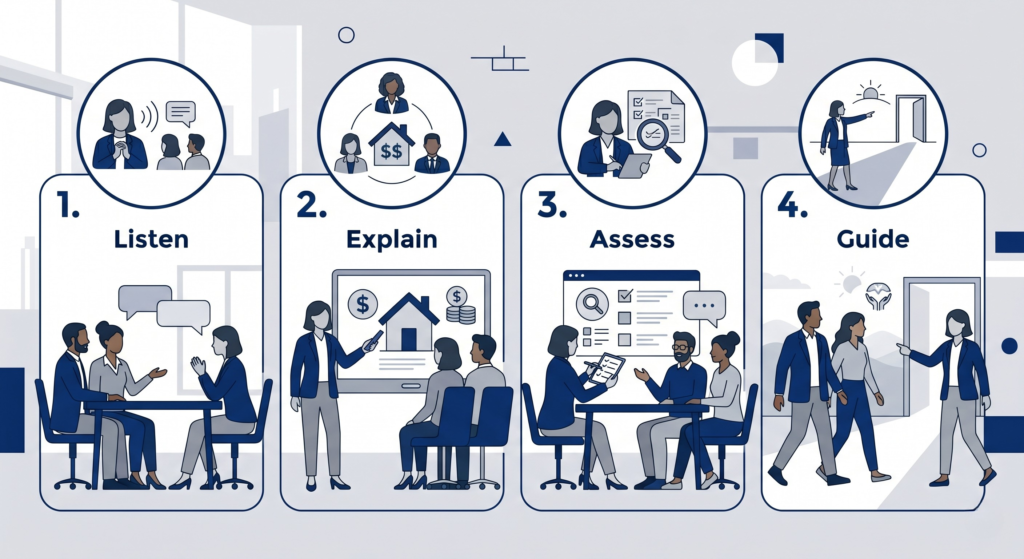
Here is what you can expect the mediator to do during your session:
- Listen to your perspective: You will get the chance to explain your side of the situation, the history of the relationship breakdown, and the specific issues you need to resolve (such as child arrangements or dividing assets).
- Explain the process: The mediator will detail how mediation actually works, as well as outline other alternatives to court, such as collaborative law or family arbitration.
- Assess suitability: Not every case belongs in mediation. The mediator will carefully assess whether mediation is safe and appropriate for your specific circumstances. If there is a history of domestic abuse or an ongoing risk of harm, mediation will likely be deemed unsuitable.
- Provide guidance and resources: Beyond just legal options, the mediator can point you toward local support services, including parenting classes, debt advice, or emotional counseling.
How Long Does MIAM Mediation Take?
A very common question people ask is regarding the time commitment. Generally, a MIAM is quite brief. You should expect the meeting to last anywhere between 45 to 60 minutes.
Because it is an information and assessment session rather than a negotiation, it does not drag on for hours. It is simply a focused conversation to evaluate the road ahead. If you decide to proceed with actual mediation later on, those subsequent joint sessions will typically last around 90 minutes to two hours each.
Can You Attend a MIAM Online?
Yes, absolutely. Since the shift toward remote services, having a MIAM online has become standard practice. In 2026, most accredited mediators offer the flexibility of conducting these meetings via secure video links.
Attending a MIAM online is incredibly convenient. It saves you travel time, reduces the stress of going into an unfamiliar office, and makes it much easier to fit the meeting into a busy workday or around childcare responsibilities. You get the exact same level of confidentiality and professional assessment as you would in an in-person meeting.
Do Both Parents Have to Attend a MIAM?
If you are dealing with a child arrangement dispute, you might wonder if both parents have to attend a MIAM. The short answer is yes, both parties are generally expected to attend a MIAM, but you do not attend it together.
As mentioned earlier, your MIAM is an individual meeting. You attend it entirely on your own. After your meeting concludes, the mediator will usually contact your ex-partner to invite them to attend their own separate MIAM. The mediator speaks to both of you individually to ensure everyone feels safe and comfortable speaking freely.
Only if both of you agree to move forward after your individual assessments—and the mediator agrees that it is safe and suitable—will a joint mediation session be scheduled.
Why is a MIAM Required for a UK Divorce?
When dealing with a MIAM for a UK divorce or separation, it is important to understand that it is a strict legal requirement. Under UK law, anyone wishing to file a court application for most family matters must attend a MIAM first.
The primary reason behind this rule is to reduce the massive backlog of cases in the family court system. By enforcing this preliminary step, the justice system ensures that only the most complex, high-risk, or entirely unresolvable disputes actually end up in front of a judge. For everyone else, it encourages finding an amicable solution that keeps the decision-making power in the hands of the parents or former partners, rather than a judge.
How is a Family MIAM Different From a Mediation Meeting at Work?
Sometimes people confuse family mediation with a mediation meeting at work. While both use the term “mediation,” they serve entirely different purposes.
A mediation meeting at work is a voluntary process usually facilitated by an HR department or an external corporate mediator to resolve conflicts between colleagues, improve team dynamics, or handle workplace grievances. It has nothing to do with the legal system.
In contrast, a family MIAM is a legally mandated step in the UK family justice system. It specifically deals with the legal aftermath of a relationship breakdown, focusing on the division of finances, property, and child custody.
The MIAM Certificate: Your Ticket to Court
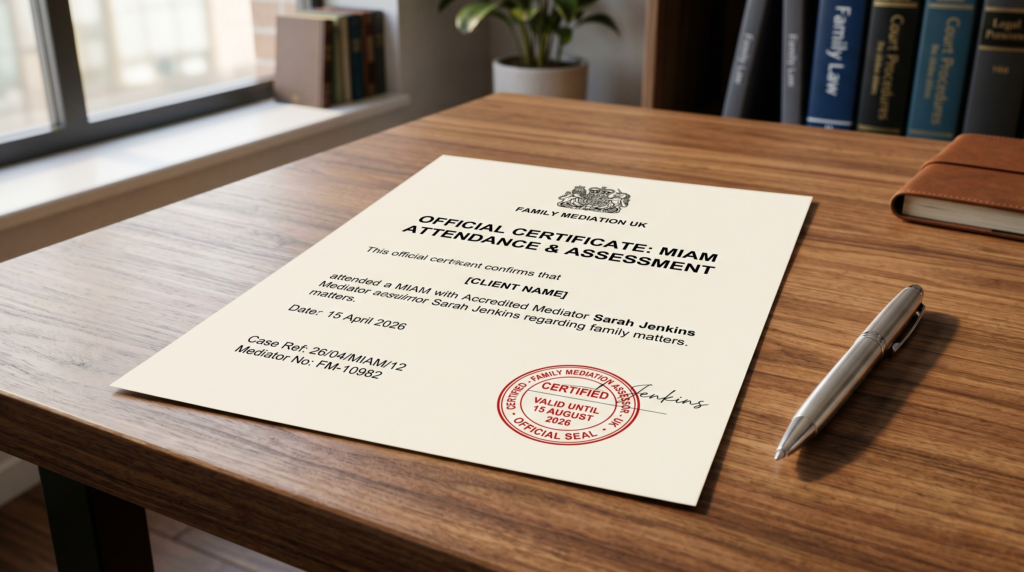
What happens if you attend the meeting and decide that mediation simply is not going to work for you? Or what if the mediator decides that your case is unsuitable for mediation?
In these situations, the mediator will issue you a MIAM Certificate. This certificate is essentially your golden ticket to court; it is usually a signature on a standard court document, such as the C100 form for child arrangements or Form A for financial disputes.
There is an important timing rule to keep in mind for 2026. A MIAM certificate is only valid for four months. You must submit your court application within this exact four-month window. If you wait too long and the certificate expires, you will have to start the process all over again, which means attending and paying for a brand-new MIAM.
The Cost of a MIAM and the Government Voucher Scheme
The cost of attending a MIAM is not fixed nationwide; it typically ranges between £90 and £150, depending on the mediator you choose and where you are located in the UK.

However, there is financial help available:
- Legal Aid: If you are on a low income or receive certain qualifying state benefits, your MIAM could be completely free under the Legal Aid scheme. If you qualify for Legal Aid, it also covers the cost of the first joint mediation session for both you and your ex-partner.
- The Family Mediation Voucher Scheme: If you attend your initial meeting and decide to proceed with joint mediation specifically regarding child arrangements, you can take advantage of the government scheme. Extended through 2026, this scheme provides a £500 voucher to help cover the costs of your joint mediation sessions. Your mediator applies for this on your behalf, making it a hassle-free way to reduce your expenses.
Frequently Asked Questions (FAQs)
1. Can I get a MIAM certificate without attending the meeting?
You can only bypass the meeting if you qualify for a strict legal exemption. The most common exemptions include documented evidence of domestic abuse, child protection concerns, or situations of extreme urgency (such as a risk of a child being taken out of the country). Without a valid exemption, skipping the meeting will result in the court instantly rejecting your application.
2. Does the mediator tell the court what I said?
Absolutely not. The entire process is strictly confidential. If you end up going to court, the mediator will only inform the judge whether or not you attended the meeting and whether mediation was deemed suitable. They will never share the private details of your conversation, so you can speak openly without fear of your words being used against you later.
3. What if I am scared of my ex-partner?
If you are afraid of your ex-partner, it is vital that you tell the mediator right away. Family mediators are highly trained professionals who know how to screen for domestic abuse, coercive control, and safeguarding issues. If they identify a risk to your safety, they will halt the mediation process and grant you an exemption immediately, allowing you to proceed straight to court without having to attempt any joint sessions.
Conclusion
At first glance, attending a MIAM might feel like just another administrative hurdle to jump over during an already stressful time. However, it is much more than an obstacle; it is a vital safeguard.
The meeting ensures that you are fully equipped with all the necessary information to make a decision that could potentially save you thousands of pounds in legal fees and months of agonizing stress in the family court system. In 2026, it remains the absolute most important first step for anyone navigating the complexities of a relationship breakdown in the UK.
Important Disclaimer: This article is intended for general informational purposes only and does not constitute legal advice. The rules regarding family court applications can be highly complex. We strongly recommend contacting an accredited family mediator or legal professional to discuss your specific situation and obtain a valid certificate.