
Domestic abuse is not limited to physical violence; it includes emotional, psychological, financial, and digital harassment. In the UK, if you are being threatened, harassed, or intimidated by a “connected person” (such as an ex-partner or family member), you have the legal right to apply for a Non-Molestation Order.
This court order is designed to protect your safety and well-being by legally forbidding the abuser from coming near you or contacting you. In 2026, the process has been modernized to be faster and more accessible for those in urgent need of protection.
Why Seeking Protection is Essential
Harassment ka asar sirf waqt ke liye nahi hota, balki ye mental health aur daily routine ko gehri chot pohanchata hai. Bohat se log ye soch kar khamosh rehte hain ke unke paas “kaafi saboot” nahi hain, ya unhein lagta hai ke sirf physical violence par hi court action leti hai. Ye khayal ghalat hai. 2026 ke legal framework mein, psychological aur controlling behavior ko utni hi ahmiyat di jati hai jitni ke kisi physical incident ko. Apne rights ko samajhna aur un par amal karna hi aapki safety ka pehla qadam hai.
What is a Non-Molestation Order?
A Non-Molestation Order is a type of injunction issued by the Family Court. It prohibits a specific person from:
- Using or threatening violence against you.
- Harassing, pestering, or intimidating you.
- Contacting you via phone, email, or social media.
- Coming within a certain distance of your home or workplace.
Crucially: Breaking a Non-Molestation Order is a criminal offence. If the abuser violates the terms, the police can arrest them immediately without needing a separate warrant.
Who Can Apply?
To apply, you must be an “associated person.” This includes:
- Current or former spouses or civil partners.
- Cohabitants (people you live with or used to live with).
- People you have had an intimate relationship with for a significant duration.
- Family members (parents, siblings, in-laws, etc.).
The Step-by-Step Application Process (2026)
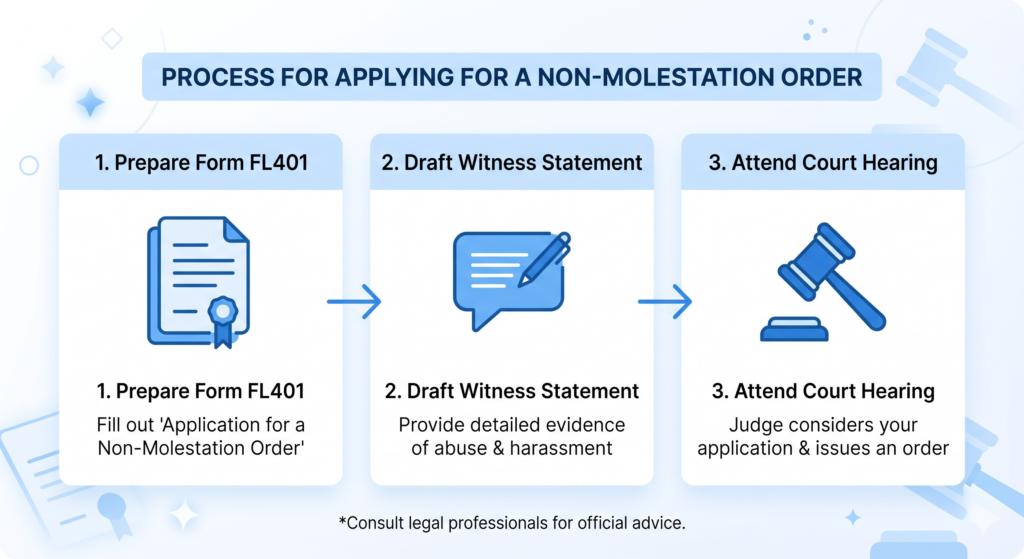
1. The Application Forms
You will need to complete form FL401. This form asks for details about you, the person you want protection from, and the specific terms you are asking the court to enforce.
2. The Supporting Statement

This is the most critical part. You must provide a “Witness Statement” detailing the incidents of abuse. Be as specific as possible regarding dates, times, and exactly what happened. Jab aap witness statement likh rahe hon, toh sirf lambi kahaniyan na likhein. Isay “chronological order” mein rakhein. Misal ke tor par: Date aur Time batayein, us waqt kya context tha, aur us harkat se aapki life par kya asar para. Digital harassment ke case mein, screenshot lete waqt ye yaqeeni banayein ke us mein timestamp aur abuser ka contact ya profile name saaf nazar aa raha ho.
3. “Without Notice” (Ex-Parte) Applications
If you are in immediate danger, you can apply for an order “without notice.” This means the court will hear your case and issue a temporary order without the abuser being present or even knowing about the application. This ensures they cannot retaliate before the protection is in place.
4. The Court Hearing
A judge will review your application. If it is an urgent “without notice” application, this often happens on the same day. The judge will decide if an order is necessary to protect your health and safety.
5. Serving the Order
For the order to be legally binding, it must be “served” (delivered) to the abuser. You should never do this yourself. A professional process server or the police will deliver the documents to ensure the abuser is formally aware of the restrictions.
What Happens After the Order is Granted?
Ek baar jab judge order sign kar deta hai, toh aapko uski certified copy hamesha apne paas rakhni chahiye. Apne phone mein digital copy rakhein aur ek physical copy kisi mehfooz jagah par. Agar abuser order ki violation kare, toh foran 999 par call karein aur police ko bataein ke aapke paas “Non-Molestation Order” mojood hai. Police department ke paas ab 2026 ke digital systems ke zariye instant access hota hai, jisse woh bina kisi deri ke action le sakte ہیں.
How Much Does it Cost?
As of 2026, there is no court fee to apply for a Non-Molestation Order. The UK government ensures that financial barriers do not prevent victims of abuse from seeking legal protection. If you use a solicitor, you may have to pay legal fees, but many people are eligible for Legal Aid in domestic abuse cases, regardless of their financial status.
Frequently Asked Questions (FAQs)
1. How long does a Non-Molestation Order last?
Typically, these orders are granted for 6 to 12 months, though they can be extended if the threat persists.
2. Does it protect my children too?
Yes. You can include your children in the application to ensure the abuser is forbidden from contacting them or coming near their school.
3. What is the difference between this and an Occupation Order?
A Non-Molestation Order protects your person (stops harassment). An Occupation Order deals with the home—it can legally force an abuser to leave a shared property, even if they own it or are on the tenancy agreement.
4. Can I apply online?
Yes, in 2026, the majority of applications are submitted through the government’s digital portal, which allows for faster processing and emergency handling.
Common Queries & Related Legal Information
Many individuals seeking protection often have specific questions regarding the evidence and terminology involved in their application. Understanding these helps in preparing a stronger case:
- How do I apply for a non-molestation order in the UK? You can apply through the government’s digital portal or by submitting form FL401 to your local Family Court.
- What evidence do I need? The court requires detailed documentation of abusive incidents, including dates, times, and impact statements. Digital proof, such as screenshots of messages or logs, is highly effective.
- Understanding Occupation Orders: While a non-molestation order protects you from harassment, an Occupation Order (often requested via the Occupation order form) deals specifically with residential rights, potentially forcing an abuser to vacate a shared home.
- Key Legal Forms: You may encounter references to forms like the FL435, which is related to court procedures, or the broader category of “Non-harassment orders.” Always ensure you are using the correct, up-to-date documentation for your specific situation.

Conclusion
Your safety is a fundamental right. A Non-Molestation Order provides a powerful legal shield that tells an abuser that their behavior will not be tolerated. If you are in immediate danger, always call 999 first. Once you are safe, the civil legal system is there to provide the long-term protection you and your family deserve.
Important Disclaimer: This article is for informational purposes and is not legal advice. If you are experiencing domestic abuse, please contact a local support charity or a qualified solicitor immediately to discuss your options and safety planning.

David Hargreaves is a legal content writer specialising in wills, inheritance, and cohabitation rights. He is passionate about helping UK residents understand what happens to their assets and loved ones, and writes in-depth guides to make the law easy to understand for everyone.