

How Much Does Family Mediation Cost in the UK? (2026 Guide)
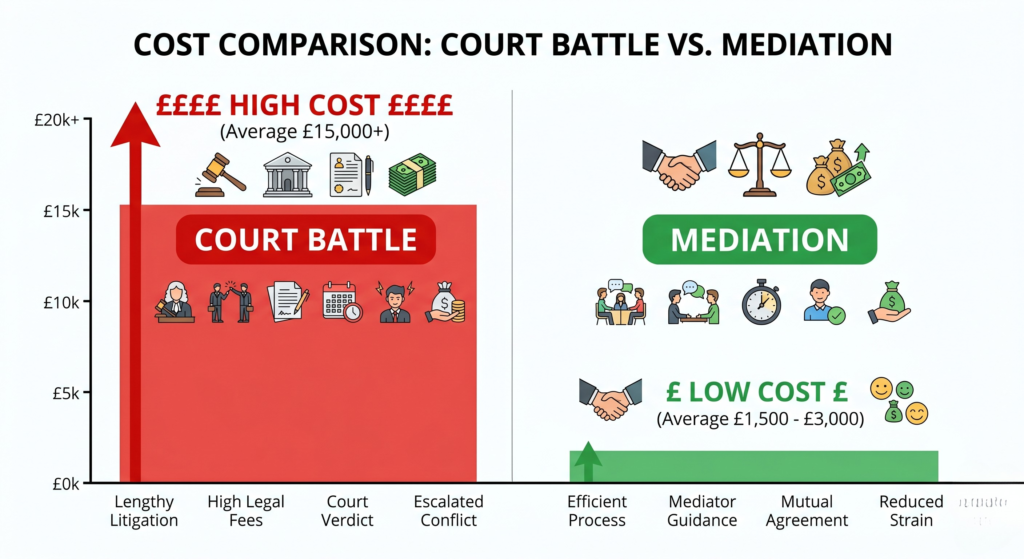
When you are dealing with a separation, the last thing you need is a mountain of legal bills. One of the primary reasons thousands of couples choose mediation in 2026 is the significant cost difference compared to traditional court battles. While court proceedings can easily cost each person £15,000 or more, mediation is a fraction of that price.
However, the cost of mediation can vary depending on where you live in the UK and the complexity of your case. Here is a detailed breakdown of what you can expect to pay in 2026.
1. The Cost of the MIAM (Initial Meeting)
As established in our previous guides, the Mediation Information and Assessment Meeting (MIAM) is your first step.
- Standard Fee: In 2026, a MIAM usually costs between £100 and £160 per person.
- What it covers: This includes the mediator’s time for the assessment and, crucially, the provision of the court certificate if you decide not to proceed with joint sessions.
Note: Many services charge VAT on top of these fees, so always ask for the “all-in” price.
2. Joint Mediation Sessions
If both parties agree to move forward, you will begin joint sessions.
- Hourly Rate: Most mediators in 2026 charge between £120 and £200 per person, per hour.
- Total per Session: Since a typical session lasts 90 minutes to 2 hours, the total cost for one joint session usually ranges from £360 to £600 (split between both parties).
- Number of Sessions: On average, couples need 3 to 5 sessions to reach a full agreement on both children and finances.
3. Documentation Fees
Once you reach an agreement, the mediator must put it in writing.
- Memorandum of Understanding (MOU): This is the summary of your proposals. Mediators typically charge a flat fee of £100 to £200 per person to draft this.
- Open Financial Statement: If your mediation involved money or property, this document is also required and usually costs a similar flat fee.
4. Factors That Influence Overall Costs

It is important to understand that no two separations are identical. Several variables can push your total costs toward the higher end of the spectrum or keep them at the lower end:
- Complexity of Assets: If you have multiple properties, business interests, or complex pension arrangements, the mediator will need more time to analyze financial disclosures. This naturally increases the number of sessions required.
- Level of Conflict: Mediation is most effective when both parties are willing to cooperate. If emotions run high and the mediator needs to spend extra time managing conflict or facilitating difficult conversations, this may require more sessions.
- Geographic Location: While many services are now online, face-to-face mediation prices in cities like London or Manchester can be higher due to overhead costs compared to regional areas.
- Document Complexity: If your Memorandum of Understanding involves highly detailed child residency schedules or intricate financial maintenance plans, the drafting time for the mediator increases, which may reflect in the final documentation fees.
5. Ways to Get Free or Subsidized Mediation
In 2026, the UK government provides two major ways to reduce or eliminate these costs:
- The £500 Mediation Voucher Scheme: The government has extended this scheme through March 2026 and into 2027. If your dispute involves child arrangements, you may be eligible for a voucher worth up to £500 per family. It is not means-tested, and your mediator applies for it on your behalf.
- Legal Aid: If you are on a low income or receive certain benefits (like Universal Credit), you may be eligible for Legal Aid. If you qualify, your MIAM and all your mediation sessions are completely free. Additionally, if one person qualifies, the other person (even if they are a high earner) also gets their MIAM and the very first joint mediation session for free.
Frequently Asked Questions (FAQs)
1. Who pays for the mediation? Usually, each person pays for their own MIAM and their half of the joint sessions. However, some couples agree that one person will cover the entire cost, or they pay for it out of joint savings.
2. Is online mediation cheaper than in-person? In 2026, most mediators charge the same rate for both. However, online mediation saves you the cost of travel and time off work, making it a more “hidden” cost-saver.
3. Does this cost include making the agreement legally binding? No. After mediation, you will still need a solicitor to turn your agreement into a Consent Order and submit it to the court. This is a separate professional fee, though it is much cheaper than a contested court hearing.
4. Can I switch mediators if I am not comfortable? Yes. If you do not feel a connection with your chosen mediator, you are free to switch. However, keep in mind that you will likely have to pay for a new MIAM with the new mediator, as they must conduct their own assessment to comply with legal requirements.
5. How are payments typically handled? Most professional mediation services in 2026 operate on a “pay-as-you-go” basis. You will usually be invoiced after each session, rather than paying the entire projected cost upfront. This allows you to manage your budget progressively as you move through the process.
Pro-Tip for Keeping Costs Down
To minimize your bill, preparation is key. Before your joint sessions, organize all your financial documents—such as bank statements, mortgage details, and pension valuations—into a clear digital folder. The less time your mediator has to spend asking for information or waiting for you to find documents during the session, the more time you can spend on actually resolving the issues. This efficiency is the smartest way to keep your professional fees to a minimum.

Conclusion
While mediation isn’t free (unless you qualify for Legal Aid), it is an investment that can save you a fortune. By spending approximately £1,000 to £2,000 on a full course of mediation, you are avoiding a court process that could easily cost ten times that amount. In 2026, mediation remains the most financially responsible way to navigate a family breakdown.
Important Disclaimer: This article is for informational purposes only. Prices vary by region and individual mediation firms. We strongly recommend requesting a written fee schedule from your chosen mediator before starting the process.