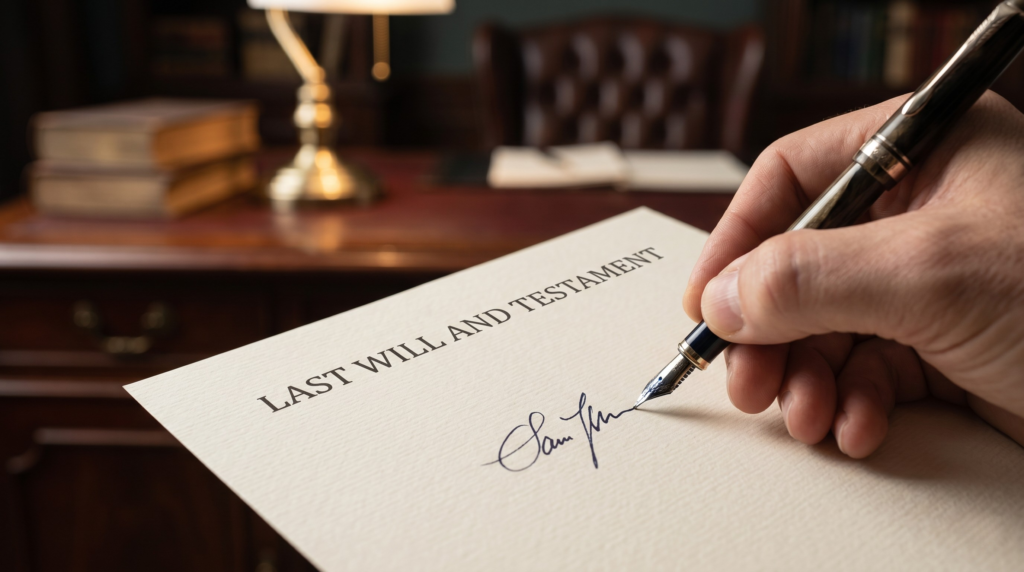
Writing your wishes on a piece of paper is a great start, but it doesn’t automatically make it a legal document. In the UK, the Wills Act 1837 (updated for 2026) sets out strict requirements for creating a legally valid will in the UK. If these rules aren’t followed to the letter, your will could be declared invalid, potentially leading to costly legal battles, family disputes, and your final wishes being completely ignored.
To ensure your Will stands up in court, it must meet fundamental legal pillars, include the right information, and avoid common pitfalls.
1. Legal Capacity and “Sound Mind”
The person making the Will (the “Testator”) must meet two basic criteria regarding their mental state:
- Age: You must be 18 years of age or older.
- Testamentary Capacity: This is the legal term for being of “sound mind.” You must understand that you are making a Will, know the extent of the property and assets you own, and understand the implications of who you are including (or excluding) as beneficiaries.
With an aging population, “capacity” is frequently challenged in court. If there is any doubt about a person’s health or memory, solicitors often recommend a Medical Practitioner’s Report to prove the Testator was fully aware of their decisions at the time of signing.
2. Voluntary Intention (No Pressure)
A Will must be made voluntarily. If a court finds that the Testator was pressured, bullied, or tricked into signing a Will, it will be set aside under the rule of “Undue Influence.” For a Will to be valid, you must be acting entirely of your own free will, without anyone “holding the pen” for you—metaphorically or literally.
3. It Must Be in Writing
While some countries recognize “oral” Wills (spoken deathbed wishes), the UK generally does not, with very rare exceptions for active military personnel.
Your Will must be a physical or digital-yet-printable document. Crucially, it must be signed by the Testator at the end of the document. If you are physically unable to sign, you can direct someone to sign on your behalf, but they must do so in your presence.
4. The Strict Rules of Witnessing

This is where most DIY Wills fail. To be legally binding, the signing process must follow these rigid steps:
- Two Witnesses: You must sign the Will in the physical presence of at least two adult witnesses.
- Simultaneous Presence: Both witnesses must be present in the room at the exact same time when you sign.
- Witness Signatures: Each witness must then sign the Will in your presence.
Can witnesses to a Will be related? Legally, yes, witnesses can be related to you. However, there is a massive catch: a witness must never be a beneficiary of the Will, nor can they be the spouse or civil partner of a beneficiary. If a beneficiary witnesses the Will, the document remains legally valid, but that specific person loses their entire inheritance. To avoid claims of undue influence, it is always safest to use completely independent witnesses, like neighbours or colleagues.
What Should Be Included in a Will in the UK?
A legally valid Will needs more than just a list of who gets your money. A complete Will should always include:

- A Revocation Clause: A statement cancelling any previous Wills you have made.
- Executors: The trusted people you appoint to manage your estate, pay off your debts, and distribute your assets.
- Guardians: If you have children under 18, you must name who will take care of them.
- Specific Legacies: Details of specific items or fixed amounts of money you want to leave to individuals or charities.
- The Residuary Estate: This is a crucial catch-all clause. It dictates who gets whatever is left over after all debts are paid and specific gifts are handed out.
What You Should NEVER Put in Your Will UK
While you have the freedom to distribute your estate as you wish, certain things should never be written into your Will:
- Funeral Arrangements: Wills are often not found or read until weeks after the funeral has taken place. It is much better to leave a separate “Letter of Wishes” for your family or pre-plan your funeral.
- Jointly Owned Property: If you own a house as “joint tenants” or share a joint bank account, those assets automatically pass to the surviving owner. You cannot overrule this in your Will.
- Direct Gifts to Pets: Under UK law, pets are considered property and cannot inherit money or assets. If you want to provide for a pet, you must leave the animal, along with a cash gift, to a trusted human guardian who agrees to care for them.
- Highly Conditional Gifts: Leaving a house to a child “only if they get a divorce” can be struck down by a court for being against public policy.
Common Mistakes That Make a Will Invalid
Even the smallest error can render a Will completely useless. Common mistakes include:
- Witnessing Errors: As mentioned, having beneficiaries sign as witnesses, or having witnesses sign at different times in different rooms.
- Making Post-Signing Alterations: Never cross out words, use correction fluid, or write new additions onto a Will after it has been signed. The court will usually ignore these changes unless they are officially re-signed and re-witnessed.
- Forgetting Marriage Revokes a Will: In England and Wales, getting married automatically cancels any existing Will you have, unless that Will was specifically written in anticipation of that marriage.
The Cost of Making a Will & Free Options

People often wonder if they have to spend a fortune to secure their legacy. Here is a breakdown of your options:
How much does it cost to make a Will with a solicitor? In 2026, a basic single Will drafted by a high-street solicitor typically costs between £150 and £400. If your situation is complex—for example, you need a trust for a vulnerable child, or you own a business—specialist solicitors can charge upwards of £500 to £1,000. Online Will-writing services are more affordable, usually ranging from £70 to £100, but they do not provide bespoke legal advice.
Free Will Templates and Charity Schemes Financial experts like Martin Lewis frequently highlight ways to get a Will written for free or at a deep discount. He often points to charity initiatives like “Free Wills Month” (typically running in March and October for those over 55) and “Will Aid” (running in November), where participating solicitors write your Will in exchange for a voluntary charity donation.
While you can easily find a free Will template online to download, you should use them with extreme caution. The best free Will templates in the UK can provide a good basic structure, but DIY templates are where the highest number of legal mistakes happen. If you miss a residuary clause or mess up the witnessing process, your “free” Will could end up costing your family thousands in legal fees later.
Frequently Asked Questions (FAQs)
1. Does a Will need to be dated to be valid?
Surprisingly, no. Under the Wills Act, a lack of a date does not automatically make the Will invalid. However, an undated Will causes an absolute nightmare for Executors. Without a date, it is incredibly difficult to prove to the Probate Registry that it is your absolute final Will, especially if an older, dated Will exists. You should always clearly date your Will to prevent confusion.
2. Can I use a digital signature for my Will in 2026?
While the UK has experimented with video-witnessing during emergencies, the gold standard remains a “wet ink” signature on a physical document. Digital signatures are becoming more common in other legal areas, but for Wills, the Law Commission still prioritizes physical security to prevent fraud.
3. Does a Will need to be notarized or stamped by a court?
No. In the UK, a Will does not need a notary’s stamp or a “seal” to be valid. As long as it is signed and witnessed correctly, it is a legal document from the moment the last person signs.
4. What happens if I make a mistake and cross something out?
Avoid this! Any “alterations” (cross-outs or additions) made after the Will is signed are usually ignored by the court unless they are also signed and witnessed. It is always better to write a new Will or a Codicil (a legal add-on).
5. Does the Will have to be on special paper?
No. You could technically write a valid Will on a napkin, provided it is signed and witnessed correctly. However, for durability and professionalism, high-quality paper is always recommended.
Conclusion
A Will is a powerful document, but its power depends entirely on its legal validity. By ensuring you have the capacity, the intent, the correct witnessing procedure, and the right clauses included, you protect your legacy from future legal challenges.
If your family situation is straightforward, standard online services or charity schemes can work perfectly. However, if your estate is complex, or if you are deliberately excluding a close family member, simply following a free template might not be enough. In those cases, consulting a professional to draft a bulletproof Will and a supporting Letter of Wishes is the smartest investment you can make for your family’s future peace of mind.
Important Disclaimer: legalfacts.uk provides general information. We are not solicitors. If you are concerned about “Testamentary Capacity” or potential “Undue Influence” claims, please consult a qualified UK family solicitor to ensure your Will is fully compliant.

David Hargreaves is a legal content writer specialising in wills, inheritance, and cohabitation rights. He is passionate about helping UK residents understand what happens to their assets and loved ones, and writes in-depth guides to make the law easy to understand for everyone.