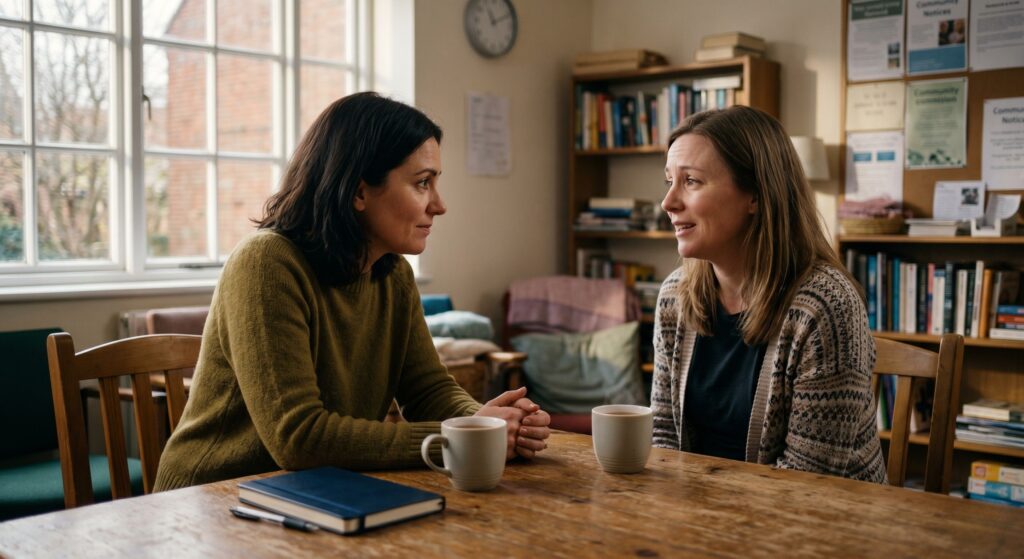
A few years back, a woman I was supporting — I’ll call her S, because privacy matters even in a blog post — sat across from me in a cramped community centre room and said something I still think about: “Everyone keeps asking me why I didn’t leave sooner. Nobody’s asked me what I actually need right now.”
That sentence changed how I do this work. I’ve spent time working alongside IDVAs (Independent Domestic Violence Advisors), supporting survivors through court processes, helplines, and the slow, unglamorous work of helping someone rebuild a life. Most of what I write about now comes back to one thing: real domestic abuse legal help — not the textbook version, but what it actually looks like to walk someone through it. And if there’s one thing I’ve learned, it’s that most advice out there is written for the abuse — the definitions, the cycle, the statistics — and almost nothing is written for the moment after disclosure, when someone has just told you, and you’re standing there thinking “okay, now what do I actually do?”
So this isn’t a clinical breakdown. It’s what I wish someone had told me before I sat in that first room.
The First Few Minutes Matter More Than You Think
I made a mistake early on that I see other people make constantly: I tried to “fix” it immediately. Someone discloses abuse to you, and your instinct is to jump straight to solutions — call the police, leave him, here’s a refuge number. I did this with my second-ever case and watched the woman shut down completely. She didn’t come back for three weeks.
What I learned instead: the first response isn’t about action, it’s about belief. You say something like “I believe you” and “this isn’t your fault” before you say anything else. That’s it. No advice yet. People who’ve been controlled for months or years have usually had their reality questioned constantly — by the abuser, sometimes by family, sometimes by their own self-doubt. The first thing they need is someone not adding to that.
How to Actually Help Once Abuse Is Confirmed
This is the part people ask me about most, so here’s how it actually breaks down in practice, step by step:

1. Safety first, always — but let them lead the pace.
You assess immediate danger before anything else. Are they safe tonight? Is the abuser in the house right now? This isn’t a form you fill in robotically — it’s a conversation. I usually ask directly: “Do you feel safe going home today?” If the answer is no, that’s when you move toward emergency options — police, a refuge bed, a friend’s place for the night.
2. Don’t skip safety planning, even if it feels premature.
A safety plan sounds dramatic but it’s practical: which exit to use, what to pack in advance (documents, meds, a phone charger), a code word with a friend, where the kids’ school is in case there’s an emergency pickup. I’ve seen safety plans literally save someone a panicked 3am decision because they’d already thought it through calmly beforehand.
3. Document everything, but only when they’re ready.
Messages, photos of injuries, dates, witness names — this stuff matters enormously later for legal protection, but pushing someone to “gather evidence” too early can feel like you’re treating them as a case file instead of a person. I let people document at their own pace and just explain why it helps.
4. Connect them to the right specialist — don’t try to be their everything.
This is one I had to learn the hard way. Early on I tried to be counsellor, legal advisor, and emotional support all at once. Burned myself out and gave worse advice because of it. Now I connect people to an IDVA, a solicitor who does legal aid work, and a domestic abuse charity — and I stay in my actual lane, which is support and continuity, not expertise I don’t have.
5. Respect their decision, even when it’s not the one you’d choose.
This is the hardest one. Sometimes someone discloses abuse and then decides not to leave — not yet, maybe not for months. I used to find this almost unbearable to sit with. But pushing someone to leave before they’re ready statistically makes things more dangerous, not less, because the period right after leaving is often the highest-risk window. Your job is to keep the door open, not to make the decision for them.
“How Do I Defend Myself Against Abuse?” — A Question I Get a Lot
People sometimes ask this expecting a physical self-defence answer, but in my experience the more useful kind of “defending yourself” is legal and structural, not physical:
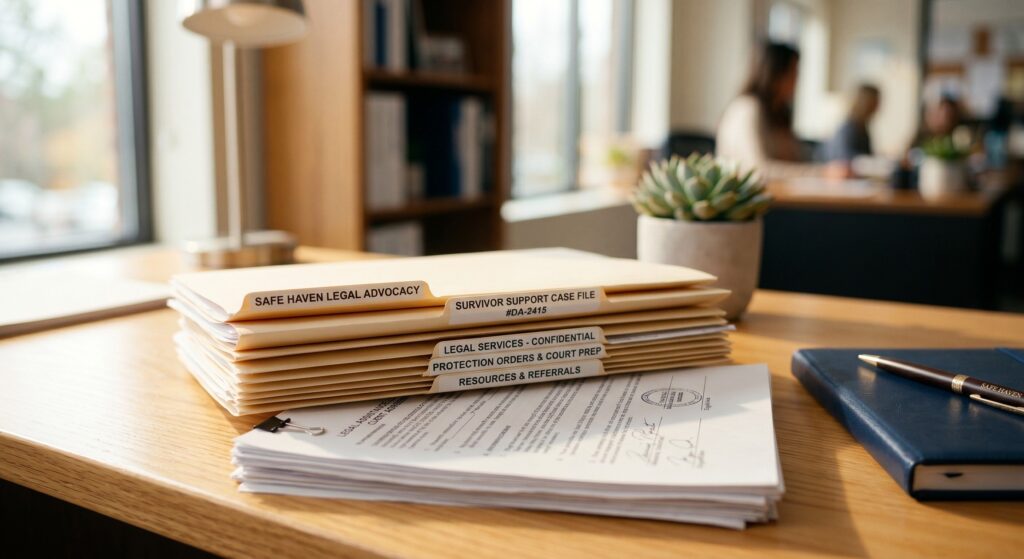
- Get a Non-Molestation Order or Occupation Order through the family courts if you’re in England or Wales — these are civil injunctions that legally stop someone from contacting you or force them out of the shared home.
- Use Domestic Violence Protection Notices/Orders — police-issued protection that buys you breathing room (up to 48 hours via a notice, up to 28 days via a court order) to plan your next steps without immediate contact from the abuser.
- Build a paper trail — screenshots, a private journal with dates, medical letters. Courts take coercive control seriously now, but only if there’s something to point to.
- Know that emotional and financial abuse counts. I’ve had people tell me “but he never hit me” as if that disqualifies them. It doesn’t. Coercive control — isolating you, controlling money, monitoring your phone — is recognised legally as abuse on its own.
The physical safety piece matters too, obviously, but it’s situational and personal — a safety plan tailored with a domestic abuse advocate will always beat generic advice here.
“When Caring for Victims of Abuse, You Should…” — The Things That Actually Matter
If I had to compress years of this into a short list for someone supporting a friend, family member, or client:
- Believe them first, ask questions second. Interrogating the details before offering support makes people feel like they’re on trial.
- Never contact the abuser yourself, even with good intentions. I’ve seen well-meaning relatives “have a word” with an abuser and it escalated the danger overnight.
- Avoid ultimatums (“leave him or I can’t help you anymore”). It isolates the person further and often pushes them back toward the abuser, not away.
- Respect confidentiality fiercely. Who they’ve told and what they’ve shared needs to stay contained, because information leaking back to an abuser can be genuinely dangerous.
- Check in without pressure. A simple “thinking of you, no need to reply” text means more than people realise.
- Take care of yourself too. Vicarious trauma is real. I didn’t take this seriously for the first year and it caught up with me.
“What Is Beaten Spouse Syndrome?” — A Term Worth Understanding Carefully
This term comes up sometimes, often from people who’ve seen it in a legal or psychology context. It generally refers to a pattern of psychological responses — learned helplessness, hypervigilance, difficulty leaving, sometimes minimising the abuse — that can develop in people experiencing sustained domestic violence. It’s been used historically in some legal defences, most notably in cases where survivors have acted in self-defence against an abuser.
A few honest caveats from someone who’s seen this term used and misused: it’s not a formal clinical diagnosis in most diagnostic manuals, and a lot of advocates today prefer language like “trauma responses to coercive control” because “syndrome” can sound like something’s wrong with the survivor rather than something that was done to them. If you ever hear this term applied to someone you’re supporting, I’d gently steer the conversation away from labelling and toward what they’re actually experiencing — fear, exhaustion, confusion, conflicting feelings about the relationship. That’s more useful than a clinical-sounding label.
Mistakes I See Constantly (Including Ones I’ve Made)
- Treating “why didn’t you just leave” as a reasonable question. It isn’t. Leaving is often the most dangerous point in an abusive relationship, financially and physically.
- Assuming a calm demeanor means it’s not serious. Some of the most severe cases I’ve supported involved people who seemed composed and articulate. Trauma doesn’t always look like crying.
- Forgetting kids change everything. Custody fears keep people in abusive situations longer than almost anything else. Always loop in support that understands child arrangements law.
- Rushing legal action before emotional readiness. Court is gruelling. I’ve seen people withdraw cases not because the abuse wasn’t real, but because they weren’t supported enough to get through cross-examination — even with special measures in place like screens or video links.
- Not knowing legal aid exists. A huge number of people assume they can’t afford legal help and just… don’t ask. Domestic abuse is one of the few areas where legal aid is still genuinely accessible if you can provide supporting evidence — a police report, a GP letter, or a refuge organisation’s letter usually works.
Where This Actually Leaves You
If you’re reading this because someone in your life has disclosed abuse to you, or because you’re trying to help someone professionally, here’s the honest truth: there’s no script that gets this perfectly right every time. Good domestic abuse legal help isn’t just about knowing the law — it’s consistency. Showing up, believing them, not forcing pace, and knowing when to bring in people with more specific expertise than you have.
And if you’re the one who’s experienced this yourself — not the helper, but the person living through it — please know that reaching out isn’t weakness, and it doesn’t have to be a dramatic, all-at-once decision. It can be one phone call. One conversation. One small step toward someone who’ll actually listen before jumping to advice.
If you’re in immediate danger, call 999. For ongoing support, the National Domestic Abuse Helpline and local domestic abuse charities are there 24/7, and reaching out costs you nothing but the call.
This article reflects practical experience and general guidance, not legal or clinical advice. If you’re dealing with abuse personally, please speak with a qualified solicitor, IDVA, or domestic abuse specialist who can advise on your specific situation.

David Hargreaves is a legal content writer specialising in wills, inheritance, and cohabitation rights. He is passionate about helping UK residents understand what happens to their assets and loved ones, and writes in-depth guides to make the law easy to understand for everyone.