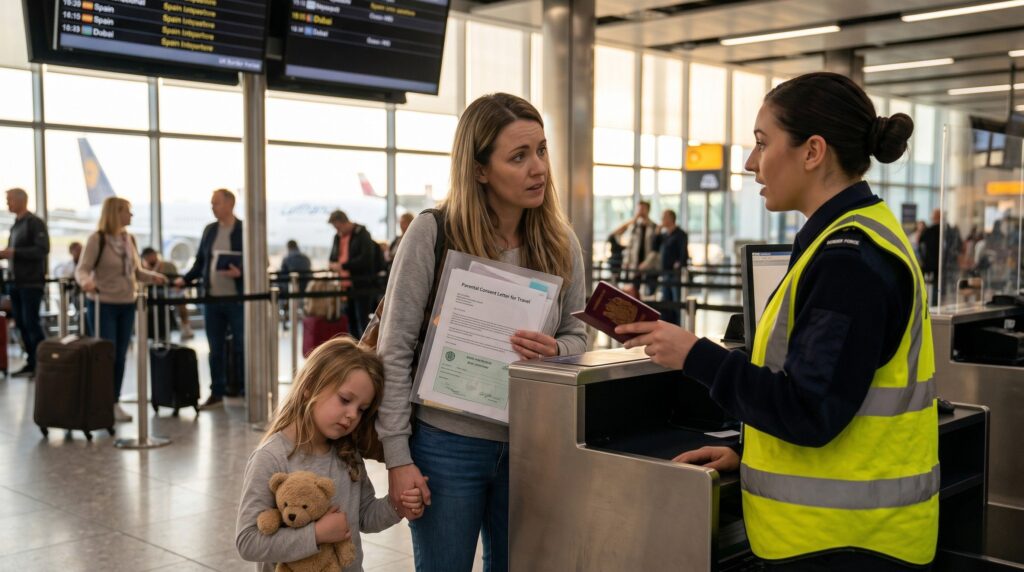
I’ll never forget the morning a friend of mine — let’s call her Sara — stood at Manchester Airport with her suitcase already checked in, her son half asleep in the buggy, and a Border Force officer asking her one simple question: “Where’s the consent letter from the father?”
She didn’t have one. She wasn’t trying to do anything wrong — her ex just wasn’t replying to texts that week, and she figured “he’s not even that involved, it’ll be fine.” It wasn’t fine. They missed the flight. Rebooked it two days later, this time with a signed letter sitting right on top of the passports.
That moment is basically why this article exists. If you’re a separated or divorced parent trying to take a child abroad, the legal side of it is way less obvious than people assume — and getting it wrong doesn’t just mean an awkward conversation, it can mean a cancelled holiday or, in the worst cases, a criminal record.
I’ve gone through this process myself with my own daughter, and I’ve helped two friends sort out their travel consent paperwork. Here’s everything I learned, the mistakes I watched people make, and what you actually need before you book that flight to Spain, Dubai, or anywhere else.
Why You Can’t Just “Take” Your Child Abroad
Here’s the part that surprises almost every parent I’ve spoken to: it doesn’t matter if you’re the one who does the school run every day, cooks every meal, and has had the child living with you since the breakup. If the other parent legally holds Parental Responsibility, you need their permission every single time you take a child abroad — even for a two-night trip to Paris.
This isn’t a “soft suggestion” kind of rule either. Taking a child abroad without the right permission can legally count as child abduction in the UK, and that’s treated as a criminal matter, not just something to argue about in family court later.
Border checks in 2026 are noticeably tighter than they were even a few years ago. I noticed this firsthand last summer — the officer at the gate didn’t just glance at our passports, she specifically asked who the second parent was and whether they knew about the trip. A few years back, nobody asked me that.
What Is Parental Responsibility (And Who Has It)
Parental Responsibility (PR) is the legal authority to make decisions about a child’s life — schooling, medical treatment, religion, and yes, travel.
You automatically have PR if:
- You’re the child’s mother.
- You’re the father and were married to the mother when the child was born.
- You’re the father named on the birth certificate (for births registered after December 2003).
- A court has granted you PR through an order.
So here’s the bit that trips people up: even if you’ve never been married, even if he’s barely seen the child in months, if his name is on that birth certificate, he has equal say in whether your child can take a child abroad with you. No shortcuts around it.
If both parents agree, great — you’re free to travel. If one of you says no, you legally cannot leave the country with the child without sorting it through the courts first.
The 28-Day Rule Explained Properly
This is the one exception that actually gives separated parents some breathing room, and it’s worth understanding properly because I’ve seen people misquote it badly.
If you have a Child Arrangements Order stating the child “lives with” you, UK law allows you to take that child abroad for up to 28 days without needing the other parent’s written consent — as long as it doesn’t clash with any court-ordered contact time.
That said, even when I had this exact order in hand, I still messaged my ex with the dates and flight details. Not because I legally had to, but because skipping that step almost always backfires. It either triggers a panicked phone call mid-holiday or — worse — an emergency court application while you’re sat on a beach somewhere. A two-line message saves you both the stress.
What to Pack in Your Travel Consent Folder
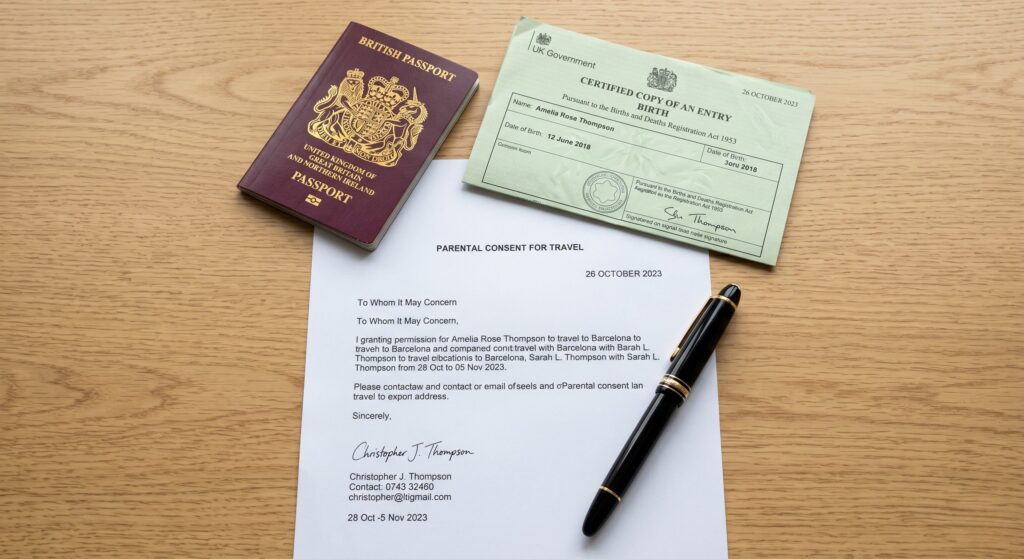
This is the bit I wish someone had told me before my first solo trip with my daughter. Verbal permission means nothing to a border officer. You need paper — physical or digital, but documented.
Here’s what I now keep in what I call my “travel folder” every single time:
1. A signed consent letter — including the other parent’s contact number, the travel dates, destination, and flight numbers. This is the single most important document. Some countries (South Africa and the USA are known for this) may even ask for it to be notarised — meaning a solicitor has witnessed the signature.
2. The child’s birth certificate — especially important if your surname doesn’t match the child’s. I learned this one the hard way when I went back to my maiden name and got an extra ten minutes of questioning because of it.
3. Marriage or divorce certificate — to explain any naming mismatch between your documents and theirs.
4. A copy of any Child Arrangements Order — particularly if you’re relying on the 28-day rule above.
I now keep digital scans of all of these in a folder on my phone, plus a printed copy in the actual suitcase. Border officials abroad have asked for the physical copy more than once.
If the Other Parent Refuses
Sometimes the other parent isn’t being difficult for no reason — they’re genuinely worried the child won’t come back, especially with international travel. I’ve seen this fear come from a real place, even when the holiday itself was completely harmless.
A few practical steps that actually work:
- Talk it through first. Share the full itinerary, the return flight number, and accommodation details. Half the “no’s” I’ve seen turn into “okay, fine” once the other parent sees the full plan in writing.
- Try mediation. A neutral third party can often defuse tension that two ex-partners can’t manage alone.
- Apply for a Specific Issue Order if nothing else works. The court will weigh up whether the holiday is genuinely in the child’s best interest. Unless there’s an actual abduction risk, judges tend to approve reasonable, well-documented holiday requests.
Common Questions People Actually Ask
Can one parent take a child out of the country?
Only if they have full Parental Responsibility on their own, both parents agree, or there’s a Child Arrangements Order allowing it (like the 28-day rule). Otherwise, no — one parent can’t unilaterally decide to take a child abroad if the other parent objects and holds PR.
Do I need to ask permission to take a child abroad?
Yes, if anyone else holds Parental Responsibility for that child. This applies to weekend trips, not just long holidays — there’s no “short trip” exemption.
Can a minor travel abroad with only one parent?
Yes, this is completely normal and happens all the time — but airlines and border control often expect proof that the other parent (or guardian) knows and consents, especially if surnames don’t match. This is exactly why a signed travel consent form matters so much.
Can you control who your co-parent allows around your child?
Generally, no — once a child is with the other parent during their custody time, that parent makes day-to-day decisions, including who’s around the child, unless a court order specifically restricts contact with a particular person (for safety reasons, for example). Travel consent and “who they’re around” are two separate legal issues.
Mistakes I’ve Seen Parents Make
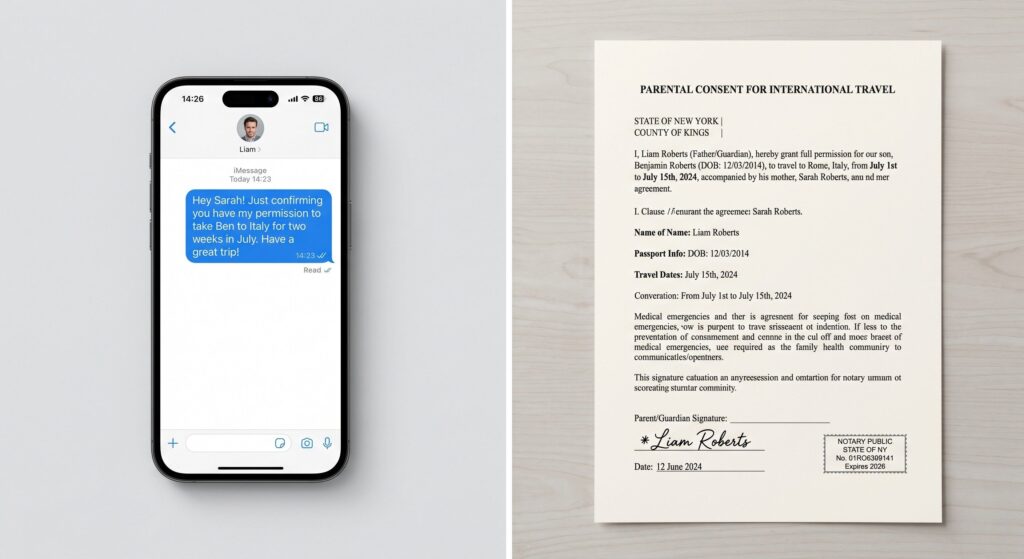
- Relying on a text message. It’s evidence, technically, but border staff almost always want a proper signed letter, not a screenshot.
- Leaving it until the week before the flight. Sorting consent or, worse, a court application, takes time. I’ve seen people lose entire holidays because they left this until the last minute.
- Assuming grandparents don’t need paperwork. They do. Grandparents have zero automatic Parental Responsibility, so they need the same written consent as anyone else taking a child abroad.
- Forgetting the birth certificate when surnames differ. This single document has saved me from extra questioning more than once.
- Not checking destination-specific rules. Some countries want notarised letters, others don’t ask at all. Always check the requirements for your specific destination before flying — using a free, downloadable child travel consent form template as your starting point makes this much easier.
Final Thoughts

Taking a child abroad as a separated parent isn’t complicated once you know the actual rules — it just feels complicated the first time because nobody explains it properly beforehand. Get the consent sorted early, keep your paperwork organised in one folder, and talk to the other parent before you’re standing at the gate hoping they don’t ask questions.
The honest truth is most holidays go through without a single hiccup. The stress almost always comes from leaving things too late, not from the law itself being unreasonable.
Disclaimer: This article is for general information only and isn’t legal advice. Rules around international child travel can change, so always check the latest GOV.UK guidance and speak to a family solicitor if there’s any dispute over taking your child abroad.

Sarah Mitchell is a family law specialist with a strong background in child arrangements, custody disputes, and family mediation. She joined LegalFacts.uk to help parents across the UK understand their legal rights and make informed decisions for their children’s future.